Scope of Work
Plumbers work inside the property; drainage contractors work underground and across the site.
Property owners often assume a plumber can handle any water-related problem, from a leaking tap to a flooded driveway. In practice, plumbing and civil drainage are two different trades with different tools, training, and scope of work, and mixing them up usually means calling the wrong person first.
Understanding the difference between a civil drainage contractor and a plumber in Hamilton can save you a wasted call-out and get the right specialist on site the first time, rather than paying for an assessment that ends with a referral elsewhere.
In everyday conversation, "plumbing" often gets used as a catch-all term for anything involving pipes or water, whether that's a tap inside the house or a stormwater line buried under the driveway. Trade directories don't always help, since many general contractors list both services even if their actual experience sits firmly on one side.
The distinction matters more than it might seem. A trade licensed and experienced in indoor pipework isn't automatically equipped, insured, or practised in trenching, excavation, and the compliance requirements that come with underground civil work.
A plumber's work generally sits inside the building envelope: water supply lines, hot water systems, fixtures, gas appliances, and the pipework connecting them. Our own Hamilton plumbing team handles exactly this scope, including leak repairs, fixture installation, and bathroom renovation plumbing for homes and businesses across the region.
Plumbers are trained to work with pressurised water systems and gas lines, and their tools reflect that: pipe wrenches, soldering equipment, and diagnostic gear built for indoor, above-ground pipework rather than trenching through clay or rock.
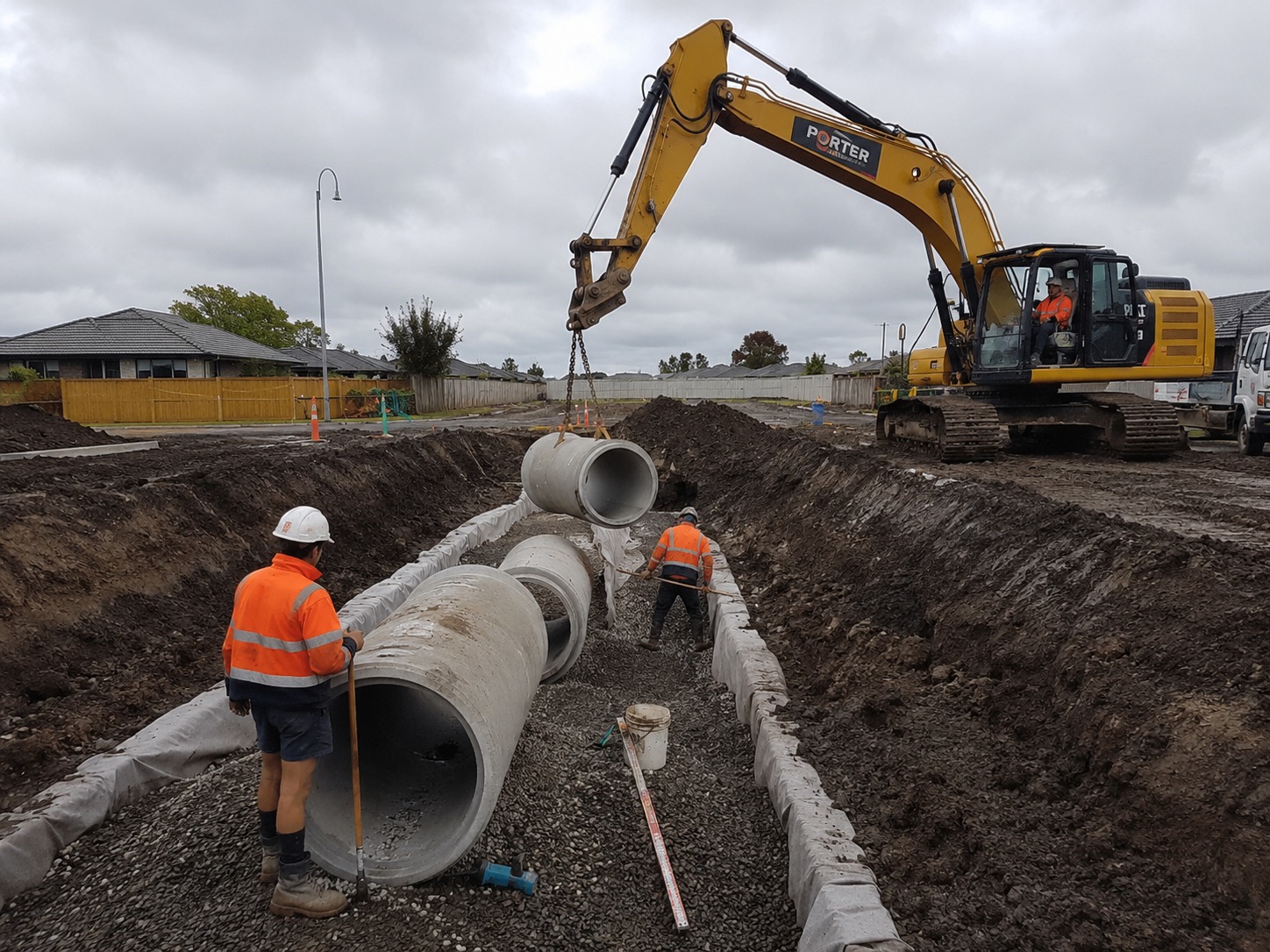
A civil drainage contractor, sometimes called a drainlayer, works below ground. That means excavation, trenching, stormwater and sewer pipe installation, soak holes, and the reinstatement of the ground once pipework is in. Our drainlaying team handles this scope across residential, commercial, and subdivision development projects throughout the Waikato.
This work relies on machinery, not just hand tools: excavators, trenchers, and compaction gear, along with a working knowledge of fall calculations, pipe bedding, and council compliance for underground services that a typical plumbing apprenticeship doesn't cover.
Key Differences Between Plumbers and Drainage Contractors
Plumbers work inside the property; drainage contractors work underground and across the site.
Plumbers use hand tools and pressure-testing gear; drainage contractors use excavators and trenching equipment.
Plumbers handle leaks and fixtures; drainage contractors handle blocked or damaged underground pipe networks.
Plumbing jobs are usually contained to a fixture or room; drainage projects often span an entire section.
Drainage work is closely tied to stormwater and sewer connection standards set by council.
Drainage contractors typically arrange or operate their own equipment for excavation and trenching.
A quick phone call can usually confirm which trade you need before anyone visits the site. Ask whether the problem is above or below ground, whether it involves a fixture or the wider property, and whether water is pooling outside rather than leaking inside.
A reputable business, whether a plumber or a drainage contractor, will ask these same questions themselves and tell you honestly if the job sits outside their usual scope, rather than taking the call-out regardless.
If the problem is inside the house, such as a leaking pipe, a failing hot water cylinder, or a bathroom fit-out, call a plumber. If the problem is outside, underground, or involves stormwater drainage, you need a civil drainage contractor with excavation experience.
Some projects need both. A full bathroom renovation, for example, might need plumbing for the fixtures and drainlaying support if the underground waste connection also needs attention, particularly in older homes where original pipework has degraded.
For anything involving excavation, stormwater, or sewer work, a team that specialises in civil drainage will have the machinery, compliance knowledge, and experience to get it right the first time, rather than treating it as an add-on to a plumbing job that isn't their main focus.
This also tends to matter for cost and timing. A dedicated drainage team can plan excavation and reinstatement as one continuous job, rather than needing a separate contractor brought in partway through once the plumbing side of things reaches its limit.
Calling a plumber for what turns out to be an underground drainage fault usually means paying for a call-out fee before being referred elsewhere. The plumber isn't at fault here; it simply isn't their scope of work, and most will say so honestly rather than attempting a repair outside their experience.
The reverse also happens. A drainage contractor called out to an indoor leak will generally recommend a plumber rather than take on pressurised pipework or gas connections outside their usual trade. Getting a clear answer over the phone before booking a visit can save a wasted morning waiting for the wrong tradesperson to arrive.
Whichever trade your project needs, being able to describe the problem clearly, where it is, when it started, and what makes it worse, helps get the right contractor booked in on the first call rather than the second.
Not sure which trade your project needs? Tell us what’s going on and we'll point you to the right team, or handle both scopes under one roof.